
Is Your Quality System Saving Lives? The Critical Link Between Process and Protection
In industrial environments, quality management is often discussed as a way to reduce scrap rates or pass an audit. While those outcomes are important for the bottom line, the true value of a robust Quality Management System (QMS) is much more personal: it is a primary tool for keeping people safe on the job.
When a weld fails on a structural beam or a pressure vessel is built to the wrong specification, the result is rarely just a financial loss. In the field, a quality failure is often a safety failure. By treating quality as an operational discipline rather than a paperwork exercise, leaders can create a work environment where protection is built into every process.
The Cost of a Quality Failure: Lessons from History
The stakes of industrial quality are perhaps best illustrated by the 1980 Alexander L. Kielland tragedy in the North Sea. The Norwegian semi-submersible platform capsized, resulting in the loss of 123 lives. The root cause was eventually traced back to a 6mm fillet weld on a non-load-bearing instrument flange. Because the weld was of poor quality, a fatigue crack developed, eventually leading to the failure of an entire bracing leg.
It wasn't a massive design flaw that brought the platform down; it was a localized failure in quality execution that bypassed the system's safety redundancies.
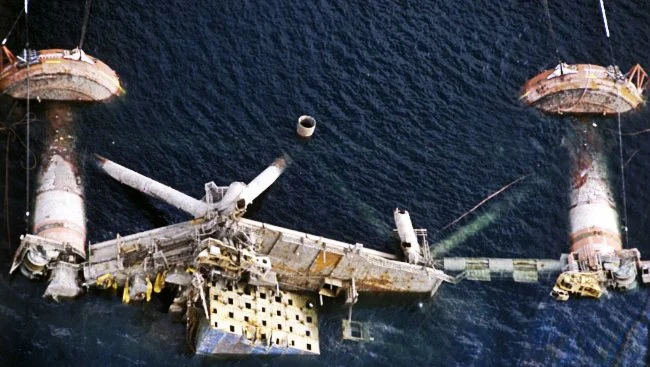
Deep Dive: The Alexander L. Kielland Accident
By treating quality as an operational discipline rather than a paperwork exercise, leaders can create a work environment where protection is built into every process.
Risk-Based Thinking as a First Line of Defense
One of the core requirements of modern quality standards is risk-based thinking. In a classroom, this sounds like an academic exercise. On a shop floor or a construction site, it is the practice of asking "What could go wrong?" before a single person steps into the work zone.
A QMS forces an organization to identify potential hazards in the production cycle. This might involve evaluating the reliability of a piece of heavy machinery or assessing the environmental conditions of a job site. When a team identifies a risk during the planning phase, they can implement controls to mitigate it. This proactive approach ensures that safety is not an afterthought or a reaction to an accident, but a prerequisite for starting work.
How SOPs Remove Dangerous Shortcuts
Standard Operating Procedures (SOPs) are the backbone of any quality system. To some, they feel like restrictive "red tape." However, for an operations manager, an SOP is a verified roadmap for doing a task the right way, every time.
Quality, by definition, requires consistency. When workers follow a standardized process, they remove the variability that leads to defects. In high-stakes environments, variability is dangerous. Accidents often happen when a team takes a shortcut to save time or deviates from the established sequence of a complex task. By enforcing strict adherence to SOPs, a QMS inherently removes the "freestyling" that leads to injuries. Doing the job right and doing it safely are the same thing.
Using PDCA to Close Safety Gaps
The Plan-Do-Check-Act (PDCA) cycle is a fundamental quality tool that drives continual improvement. While it is typically used to improve product yield, it is equally effective at identifying and fixing safety gaps in real time.
Plan: Establish the safety and quality objectives for a specific project or process.
Do: Execute the work according to the defined standards and SOPs.
Check: Conduct internal audits or site inspections to see if the reality on the ground matches the plan.
Act: If an audit reveals that a guardrail is missing or a technician is using an uncalibrated tool, the system requires immediate corrective action.
This cycle ensures that the organization is constantly listening to the field. If a process is breaking down, the QMS provides the framework to stop, evaluate, and fix the root cause before a minor quality deviation turns into a major safety incident.
Bridging the Gap Between Compliance and Safety
There is often a disconnect between the people writing the procedures and the people executing the work. When a QMS is treated like a static binder on a shelf, it fails to protect anyone. It only becomes a safety tool when it is integrated into the daily rhythm of the shop or the site.
This is the gap Steelhead often sees in industrial and manufacturing operations. Many teams have the technical skill to do the work, but their systems for managing risk and consistency have become a bottleneck rather than a safeguard. This is where fractional quality support makes a difference. By bringing in an operational partner who understands field reality, companies can transform their QMS from a compliance burden into a frontline defense for their workers. Moving from theory to execution means ensuring that every process is designed to protect the people who carry it out.
